From My Experience
Three years ago, I sat in a small room in Gulberg, Lahore, helping my younger cousin apply for his first job. He had a decent degree, good English, and zero idea how hiring actually worked. He thought you just send a CV and wait for a miracle.
We spent six hours that day rebuilding his entire approach. I showed him how ATS software filters resumes before humans see them. I taught him how to spot fake job postings that waste your time or steal your data. I walked him through what interviewers are really looking for when they ask “Tell me about yourself.”
Within three weeks, he had two offers.
That experience made me realize something: most job seekers in Pakistan fail not because they lack talent, but because nobody taught them the rules of the game. The job market isn’t a lotteryit’s a system. And once you understand the system, you can beat it.
This guide is everything I taught him, expanded into a complete 2026 playbook.
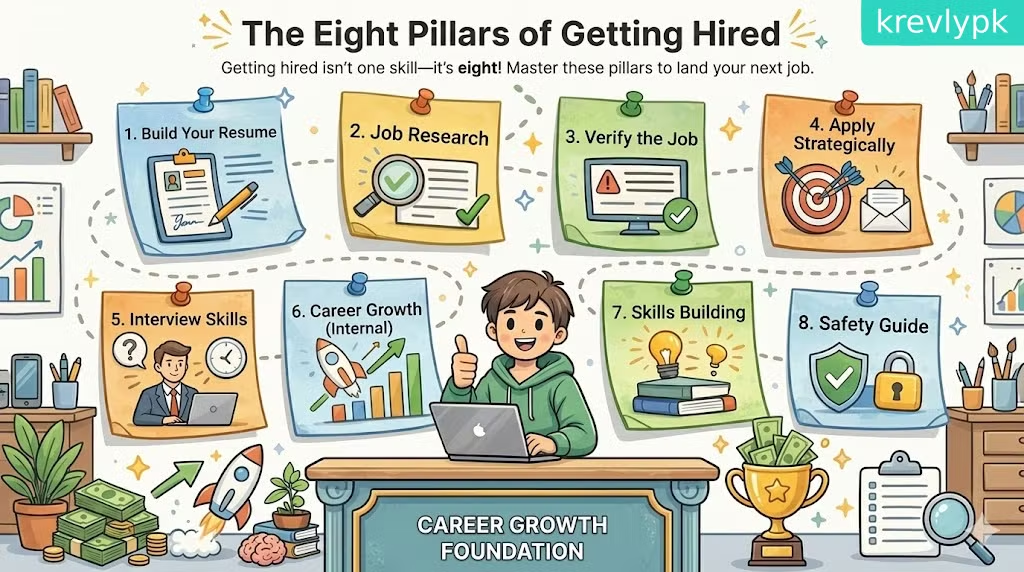
The Eight Pillars of Getting Hired
Before we dive deep, here’s the roadmap. Getting hired isn’t one skill—it’s eight different skills working together:
Now let’s break each one down with the depth it deserves.
Build Resume: The Document That Speaks Before You Do
My Experience
I once reviewed a CV from a brilliant computer science graduate in Islamabad. His technical skills were genuinely impressive—he had built apps, contributed to open-source projects, and even freelanced for international clients. But his resume was a disaster.
He had used a fancy Canva template with three columns, skill bars showing “90% Python,” and a header image that took up half the first page. It looked beautiful on screen. The problem? When I ran it through an ATS simulator, the software read his name, then a jumbled mess of random words, then nothing useful.
He had applied to 60+ jobs with that CV. Zero callbacks.
We spent one evening rebuilding it from scratch—single column, standard headings, no graphics, keywords pulled directly from job descriptions he wanted. Same person, same skills, completely different document.
Within two weeks: four interview calls.
Why Your Resume Gets Auto-Rejected
Let me be brutally honest: most resumes in Pakistan are built to impress humans but designed to fail machines. And in 2026, the machine reads your CV before any human does.
Applicant Tracking Systems (ATS) are software that companies use to filter hundreds of applications down to a manageable pile. They scan for:
The Mistakes That Kill Your Resume
Mistake
Fancy graphics and skill bars
Multi-column layouts
Creative section headings
Missing keywords
Heavy design templates
One generic CV for every job
Solution
Use plain text lists
Stick to single column
Use Experience, Education, Skills
Mirror exact keywords from job posting
Use simple Word templates
Tailor for each application
How to Build a Resume That Actually Works
Create one comprehensive resume with everything—all jobs, all skills, all projects. This is your personal database, not what you send to employers.
Highlight every skill, qualification, and responsibility mentioned. These are your keywords. If they say “project management,” don’t write “handled projects”—write “project management.”
Pull relevant items from your master document and arrange them using the job’s language. Your resume should feel like it was written for this specific role.
As we need to pass ATS you need to make CV for ATS too.
Quantify your achievements. “Increased sales” is weak. “Increased sales by 34% in six months” is powerful. Numbers make you memorable once a human finally reads your CV.
Pro Tip:
After building your resume, copy all the text and paste it into a plain Notepad file. If it reads clearly in Notepad with no jumbled text, the ATS will probably read it correctly too.
The One-Page vs. Two-Page Debate
Fresh graduates: one page. You don’t have enough experience to justify more, and padding it with fluff makes you look desperate.
Experienced professionals (5+ years): two pages maximum. If you need a third page, you’re including things that don’t matter for this specific job.
Executives and academics: different rules apply, but you’re probably not reading a general job guide if you’re at that level.
Job Research: Finding the Right Opportunities
From My Experience
When I was job hunting early in my career, I made the classic mistake: I applied everywhere. Job boards, company websites, random LinkedIn postings—if it vaguely matched my field, I clicked “Apply.”
After 50+ applications, I had two interviews. Both were for jobs I wasn’t even excited about.
A mentor finally sat me down and asked, “What kind of company do you actually want to work for?” I didn’t have a clear answer. I was so focused on getting a job that I never thought about which job would actually make me happy.
That conversation changed my approach. Instead of spraying applications everywhere, I made a list of 15 companies I genuinely admired. I researched their culture, their products, their recent news. I found specific roles that matched my skills. I applied with tailored materials.
Out of 15 targeted applications: 6 interviews, 2 offers.
Quality beats quantity. Every time.
Where to Actually Find Jobs in Pakistan (2026)
Here are some of the most reliable job portals in Pakistan.
Many good jobs never appear on portals. Companies post on their own websites first and only use job boards if they don’t get enough applications. Make a list of target companies and check their career pages directly.
The hidden job market is real. Many positions are filled through referrals before they’re ever posted publicly. Your university alumni network, professional associations, and even family connections matter more than people admit.
For specialized roles, recruitment agencies can connect you with opportunities you’d never find yourself. Build relationships with recruiters in your field—they remember candidates who are professional and responsive.
How to Research a Company Before Applying
Don’t just apply blindly. Ten minutes of research can save you hours of wasted effort.
Before applying to any company make sure to check these:
Look for their previous employee reviews and experience.
You must checkout what is actual business of company.
You may need to check their HR profile to see they really look legit.
This research serves two purposes: it helps you decide if you even want this job, and it gives you material to customize your application and ace the interview.
Pro Tip:
Set up Google Alerts for your target companies. You’ll get notified whenever they appear in news, which gives you conversation material for interviews and helps you spot new job postings early.
How to Verify a Job: Protecting Yourself from Scams
From My Experience
A young graduate in Karachi once contacted me after a nightmare experience. She had found a perfect job posting—good salary, flexible hours, reputable-sounding company. She applied, got an immediate response, and was asked to come to an orientation.
The orientation was in a small office with no signage. They asked her to pay Rs. 5,000 for training materials and to provide copies of her CNIC, educational documents, and a passport photo. Something felt wrong, so she made an excuse and left.
She was lucky. Others weren’t. That same company collected money and documents from dozens of fresh graduates before disappearing. Some victims later found their identities used for fraud.
Job scams in Pakistan are increasing every year. The desperation of job seekers makes them perfect targets. Knowing how to verify a job isn’t paranoia—it’s survival.
Red Flags That Scream Fake Job
Warning Sign
Job posted on social media only
Great Salary package
Immediate response
Asked to pay for training
Interview location is a residential
Vague job description
Pressure to decide immediately
Request for CINC
Email from Yahoo or Gmail
No LinkedIn presence
What It Usually Means
Likely not a real company
Bait to attract applicants
Mass scam operation
100% scam
Potentially dangerous
They’re hiding something
Prevents from doing research
Identity theft setup
Unprofessional or fake
Major red flag in 2026
How to Verify a Job is Legitimate
Follow this formula to verify each job posting quickly without wasting that much of your time.
Warning:
Never pay money to get a job. Never hand over original documents. Never share bank account details or PINs before you’re officially employed with proper paperwork.
What to Do If You Suspect a Scam
If you find any fake job posting or sent any documents follow this.
How to Apply for Jobs: Quality Over Quantity
From My Experience
I used to think job hunting was a numbers game. Apply to 100 jobs, get 10 interviews, land 1 offer. Simple math, right? WRONG
When I tracked my own job search data years ago, I discovered something embarrassing: my spray and pray applications had a 2% interview rate. But my carefully tailored applications where I researched the company, customized my CV, and wrote a specific cover letter had a 35% interview rate.
I was spending hours on applications that were basically lottery tickets, while the approach that actually worked took the same amount of time and got 15x better results.
Now I tell everyone: ten targeted applications beat a hundred generic ones.
The Anatomy of a Strong Application
Many good jobs never appear on portals. Companies post on their own websites first and only use job boards if they don’t get enough applications. Make a list of target companies and check their career pages directly.
Most cover letters are useless because they’re generic. “I am excited to apply for this position…” Nobody cares.
A strong cover letter:
Keep it short—three paragraphs maximum. Nobody reads a full-page cover letter.
Fill out every field they ask for. Attach every document they request. Follow their format instructions exactly. You’d be amazed how many applications get rejected because someone didn’t include a required portfolio link or skipped a mandatory question.
If you’re emailing applications directly, use a professional email address. Your full name @ gmail is fine. “cooldude786@yahoo.com” is not.
Following Up Without Being Annoying
One week after applying: a brief follow-up email is appropriate. “I wanted to confirm you received my application for [position] and reiterate my interest in the role.”
Two weeks after that: one more follow-up is acceptable. After that, move on mentally. If they want you, they’ll contact you.
If you want to become selected never do these.
The line between “showing initiative” and “being creepy” is thin. Stay on the right side.
Pro Tip:
Keep a spreadsheet tracking every application: company, position, date applied, follow-up dates, response received. This prevents double-applications and helps you see patterns in what’s working.
Interview Tips: Where Jobs Are Won or Lost
From My Experience
Early in my career, I went to an interview wearing a shirt that was two sizes too big. I had borrowed it from my older brother because I thought it looked “more professional” than my own clothes.
I spent the entire interview pulling at my collar, adjusting my sleeves, and feeling like a child wearing his father’s clothes. I was so distracted by my own discomfort that I stumbled through basic questions I knew the answers to.
I didn’t get the job. The feedback, passed through a family connection at the company, was brutal: “He seemed nervous and unprepared.”
I wasn’t unprepared—I was uncomfortable. And I learned that day that how you feel affects how you perform. Your clothes, your body language, your mental state—they all show up in the interview room whether you want them to or not.
Before the Interview: Preparation That Actually Matters
Go beyond their “About Us” page. Read recent news, understand their products, know their competitors. Find something specific you can mention that shows you’ve done homework.
Most interview questions are behavioral: “Tell me about a time when…” Have 5-6 stories ready from your experience that demonstrate different skills (leadership, problem-solving, teamwork, handling failure). Use the STAR method:
Answers that sound good in your head often fall apart when spoken. Practice with a friend, family member, or even alone in front of a mirror. The goal isn’t memorization—it’s comfort with your own stories.
“Do you have any questions?” is not a throwaway moment. It’s your chance to show genuine interest. Prepare 3-5 questions about the role, the team, growth opportunities, or current challenges. Never ask about salary or leave policies in the first interview.
Know exactly where you’re going. Plan to arrive 15 minutes early. Know what you’ll wear (and try it on the night before). Charge your phone. Print extra copies of your resume. Eliminate every possible source of last-minute stress.
During the Interview: The Human Connection
You have about seven seconds. Walk in with good posture. Make eye contact. Smile genuinely. Offer a firm (not crushing) handshake. Say their name: “Nice to meet you, [Name].“
Nervous candidates ramble. They answer questions that weren’t asked. They fill every silence with words. Practice this: when they ask a question, pause for one second, then answer concisely. It’s okay to stop talking.
If you don’t know something, say so—but add what you’d do to learn it. “I haven’t used that specific software, but I’ve learned similar tools quickly in past roles and would be confident picking it up.”
You’d be surprised how many candidates seem bored or indifferent. Energy matters. If you’re genuinely excited about the role, let it show. If you’re not excited, why are you applying?
Sit up straight. Don’t cross your arms. Make eye contact (but don’t stare). Nod when listening. Lean slightly forward to show engagement. These small signals communicate confidence and interest.
After the Interview: The Professional Follow-Up
Within 24 hours, send a brief thank-you email:
This email isn’t magic—it won’t turn a “no” into a “yes.” But it does demonstrate professionalism, and in close decisions, small things matter.
Interview Mistake
Arriving late
Badmouthing previous employer
Not knowing the company
Rambling answers
No questions at the end
Inappropriate dress
The Fix
Arrive 15 minutes early
Stay neutral or positive
Research before showing up
Practice concise responses
Prepare thoughtful questions
Dress slightly up
Career Growth: Getting Hired is Just the Beginning
From My Experience
Getting the job felt like the finish line. I remember my first real job offer—I was so excited that I didn’t negotiate, didn’t ask about growth paths, didn’t think beyond I got hired!.
Six months later, I watched a colleague who joined after me get promoted. He wasn’t smarter or more talented. But from day one, he had been building relationships with senior leaders, volunteering for visible projects, and making sure the right people knew his name.
I was just doing my job quietly in my corner, assuming good work would be noticed automatically. It wasn’t.
That experience taught me that getting hired is the beginning of a longer game. The skills that land you a job aren’t the same skills that build a career.
Your First 90 Days: Setting the Foundation
You don’t know what you don’t know. Observe how things actually work versus how the employee handbook says they work. Learn the unwritten rules before trying to change anything.
Build relationships intentionally
Don’t just connect with your immediate team. Meet people from other departments. Have coffee with senior colleagues. Find out how decisions really get made. The person who helps you most might not be your boss.
Don’t wait for your annual review. Ask your manager regularly: “What’s one thing I could be doing better?” This shows self-awareness and gives you information to improve before small issues become big problems.
Look for small opportunities to add visible value. Volunteer for projects others avoid. Solve a problem that’s been annoying your team. Create a reputation as someone who gets things done.
Long-Term Career Building
The relationships you build now will matter for decades. Stay connected with colleagues, even after they leave. Attend industry events. Be genuinely helpful to others without expecting immediate returns.
This feels uncomfortable for many people, but it’s necessary. Send updates to stakeholders. Share wins in team meetings. Make sure the people who make promotion decisions know what you’ve accomplished.
The skills that got you hired will eventually become baseline expectations. Stay ahead by continuously learning—formal courses, certifications, self-study, whatever works for you.
Pro Tip:
Find a mentor—someone more experienced who can give you honest advice and perspective. The best career moves often come from conversations with people who’ve been where you want to go.
Skills Building: What Actually Matters in 2026
From My Experience
I have a drawer full of certificates from online courses. Some of them I’m proud of. Some of them I took just because they were free or someone told me I should.
When I look back honestly, maybe 20% of those courses actually helped my career. The rest were busy work that felt productive but didn’t change anything.
The hard truth is that not all learning is equal. A certificate from a random website doesn’t impress recruiters. But demonstrable skills that solve real problems? Those get you hired.
Skills That Actually Get You Hired in Pakistan (2026)
Even non-tech jobs now require basic digital literacy. Microsoft Office (especially Excel), Google Workspace, basic data analysis—these are table stakes in almost every field.
Written and verbal English remains a key differentiator in the Pakistani job market. If you can write clearly and speak confidently, you have an advantage over many candidates with stronger technical skills.
Whatever your field, go deep. Surface-level knowledge is common. Genuine expertise is rare and valuable.
The ability to learn new tools, adjust to changing requirements, and stay calm under pressure matters more than any specific skill. Companies value people who can figure things out.
Safety Guide: Protecting Yourself Throughout the Process
From My Experience
A friend’s younger brother once shared his CNIC, educational certificates, and bank account details with a recruitment agency that promised placement in Dubai. They asked for a Rs. 50,000 processing fee which his family scraped together.
The agency vanished. The phone numbers stopped working. The office—when they tried to visit—had been vacated.
They lost the money, but worse, they lost trust. For months afterward, the family was suspicious of every job opportunity, making it even harder for him to actually find legitimate work.
Job scams don’t just steal money—they steal hope and momentum. Protecting yourself isn’t paranoia. It’s wisdom.
Physical Safety During Job Search
Always tell someone where you’re going for an interview. Share the address, company name, and expected duration. If the location seems suspicious (unmarked building, residential area, isolated location), trust your instincts.
If a company wants to meet somewhere other than their office, suggest a public space like a coffee shop. Legitimate employers understand this caution.
If something feels wrong—the person is too pushy, the opportunity sounds too perfect, the questions get too personal—it’s okay to leave. No job is worth your safety.
Digital Safety
Never send original documents. Copies only, and preferably with a watermark like “For [Company Name] Application Only.”
Create an email address specifically for job applications. This limits exposure if your information ends up in the wrong hands.
You don’t need to share your CNIC number, bank details, or family information during the application process. These are only needed after you’re officially hired.
Scam job postings often lead to phishing websites. Before entering any information, verify the URL matches the real company’s domain.
Financial Safety
This cannot be repeated enough. Real employers don’t charge application fees, training fees, or “security deposits.” If anyone asks for money, walk away.
This cannot be repeated enough. Real employers don’t charge application fees, training fees, or “security deposits.” If anyone asks for money, walk away.
Get everything in writing: salary, benefits, job title, reporting structure, start date. Verbal promises mean nothing if they’re not in the offer letter.
Research basic labor laws in Pakistan. Know what employers can and cannot legally do. This knowledge protects you from exploitation.
Warning:
The more desperate you seem, the more vulnerable you become to exploitation. Never let urgency override your judgment. A bad job or a scam will set you back further than continued searching for the right opportunity.
Quick Checklist For 8 Pillars
Before you start applying:
For each application:
Before each interview:
After the interview:
Final Words
Getting hired in 2026 isn’t about luck. It isn’t about having the perfect degree or knowing the right people (though that helps). It’s about understanding how the system works and playing the game with intention.
The job search isn’t a lottery where you hope your number gets called. It’s a system with rules. Learn the rules, and you stop hoping—you start knowing.

Noman Durrani