From My Experience
A few years ago I tracked my own job search data out of frustration. I had been applying for weeks with almost no response. When I counted properly, I had sent 67 applications in 30 days. My interview rate was just under 3%.
I was exhausted. I was demoralized. And I was doing everything wrong.
A senior colleague sat me down and asked one question: “Of those 67 companies, how many did you actually research before applying?“
I thought about it honestly. Maybe five. The rest I had skimmed the job title, decided it was close enough, and clicked apply.
That afternoon I taught him six advanced search techniques. Within three weeks he had found and directly contacted two hiring managers, researched five target companies deeply enough to customize his applications completely, and landed an interview at a digital agency he didn’t even know existed before that day.
He got the job.
Why Spray Applying Fails (And Why Everyone Still Does It)
Before we fix the problem, let’s understand it properly.
Spray applying feels logical. It feels like probability. If 80 applications produce 2 interviews, then 160 applications should produce 4. If you’re not getting responses, the obvious answer seems to be to send more.
The problem is that job hunting doesn’t work like a lottery. It works like a conversation. And you can’t have 80 genuine conversations simultaneously.
Here is what actually happens on the other side when you spray apply.
Nothing is wrong with you. Your system is wrong.
The Eight Mistakes Spray Applicants Make
Mistake
Same CV for every job
Generic cover letter
No company research
Applying to irrelevant roles
No follow-up system
Ignoring keywords
Applying to 50+ jobs daily
No target company list
Solution
ATS rejection before human review
Immediate HR disinterest
Weak interviews, obvious disengagement
Wasted time, zero callbacks
Missed opportunities, double applications
Filtered out automatically
Burnout, declining application quality
Chasing random opportunities forever
What Targeted Applying Actually Looks Like
Targeted applying is not complicated. It is not slow. It is not a luxury for people who can afford to be picky. It is a system and once you build it, it runs faster and produces better results than spray applying ever did.
Here is the complete system, step by step.
Step 1
Build Your Target Company List

This is the foundation of everything. Without it, you are always reacting to whatever appears on job portals. With it, you become proactive.
How to build it:
Sit down with a blank document and answer these questions honestly:
These simple question about self awareness.
Write down every name that comes up. Then research each one and cut the list to 20 companies maximum. These are your targets.
The Exclusion Search
Go beyond their About Us page. Spend 20 minutes per company finding:
You need to give 20 min each company and find these.
This research serves three purposes. It helps you decide if you actually want to work there. It gives you material to customize your application. And it prepares you for the interview before you even get one.
How to Use Search Engines for Advanced Job Research 2026
From My Experience Three years ago I was sitting with a fresh graduate in a …
Read Full GuideStep 2
Build Your Master Resume
Before you tailor anything, you need a comprehensive master document. This is not what you send to employers. This is your personal database.
Your master resume contains everything
This document might be four or five pages. That’s fine. Nobody sees it but you. Its purpose is to give you a complete inventory to draw from when building tailored versions.
Pro Tip:
Every time you complete a project, get feedback, or learn a new skill update your master resume immediately. Memory fades. Details disappear. Keeping it current takes two minutes and saves you an hour every time you need to apply for something.
Step 3
Tailor Your Resume for Each Application
This is where most people give up because it sounds time-consuming. It isn’t, once you have a master document to work from.
The tailoring process:
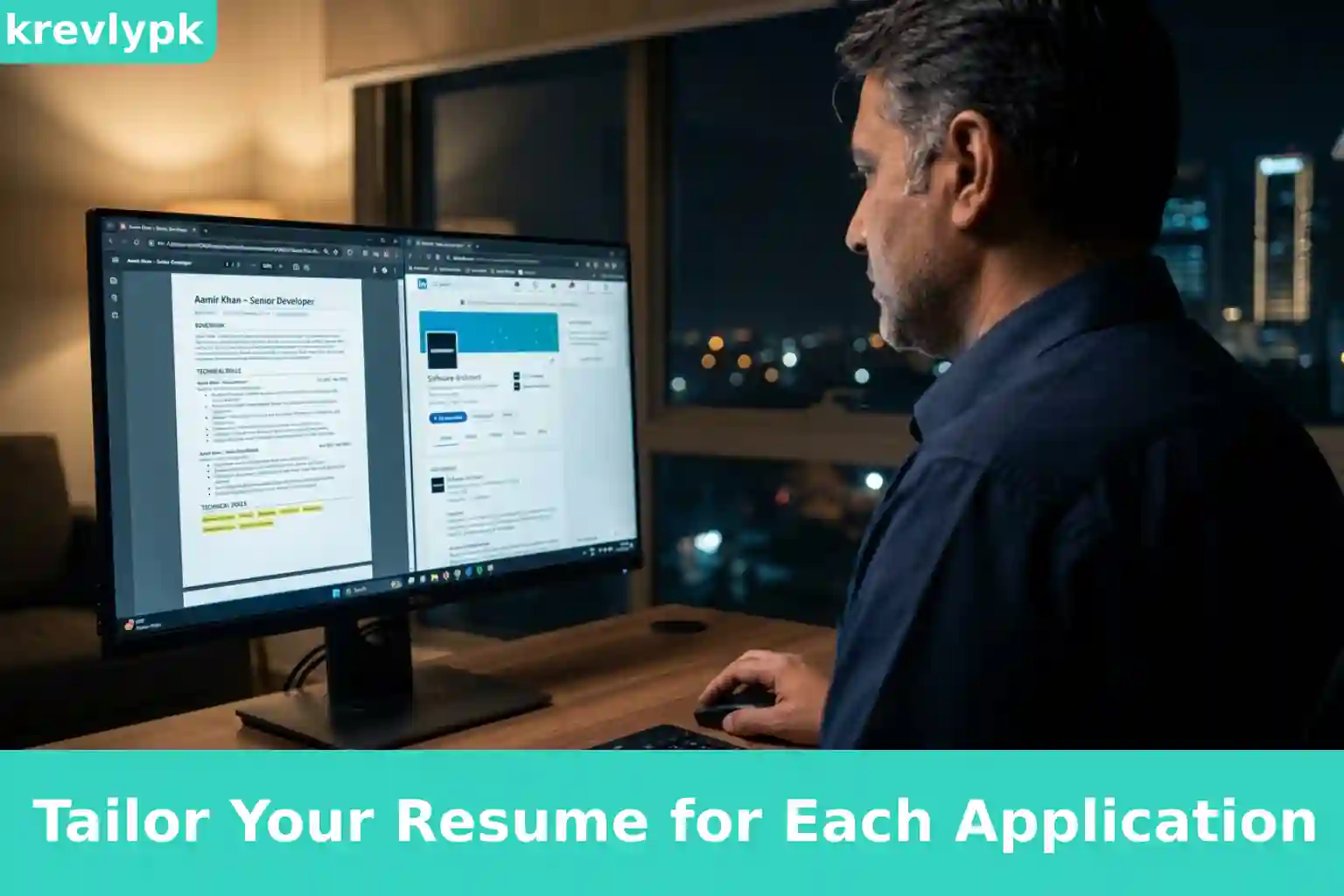
Read the job posting slowly. Highlight every skill, qualification, and responsibility they mention. These are your keywords. Write them down separately.
Now open your master resume. Pull only the experience and achievements that are directly relevant to this specific role. Cut everything that isn’t. Rewrite your bullet points using the exact language from the job posting.
If they say “stakeholder management,” don’t write “worked with clients.” Write “stakeholder management.” If they say “data-driven decision making,” don’t write “used analytics.” Write “data-driven decision making.”
You are not changing your experience. You are translating it into their language. That translation is the difference between ATS rejection and human review.
Your master resume contains everything
Pro Tip:
Fresh graduates: one page maximum. Experienced professionals: two pages maximum. If you need a third page, you’re including things that don’t matter for this role.
Why is My Resume Getting Auto Rejected
From My Experience I once spent an entire weekend building a CV that looked like …
Read Full GuideStep 4
Write a Cover Letter That Proves You Did Homework
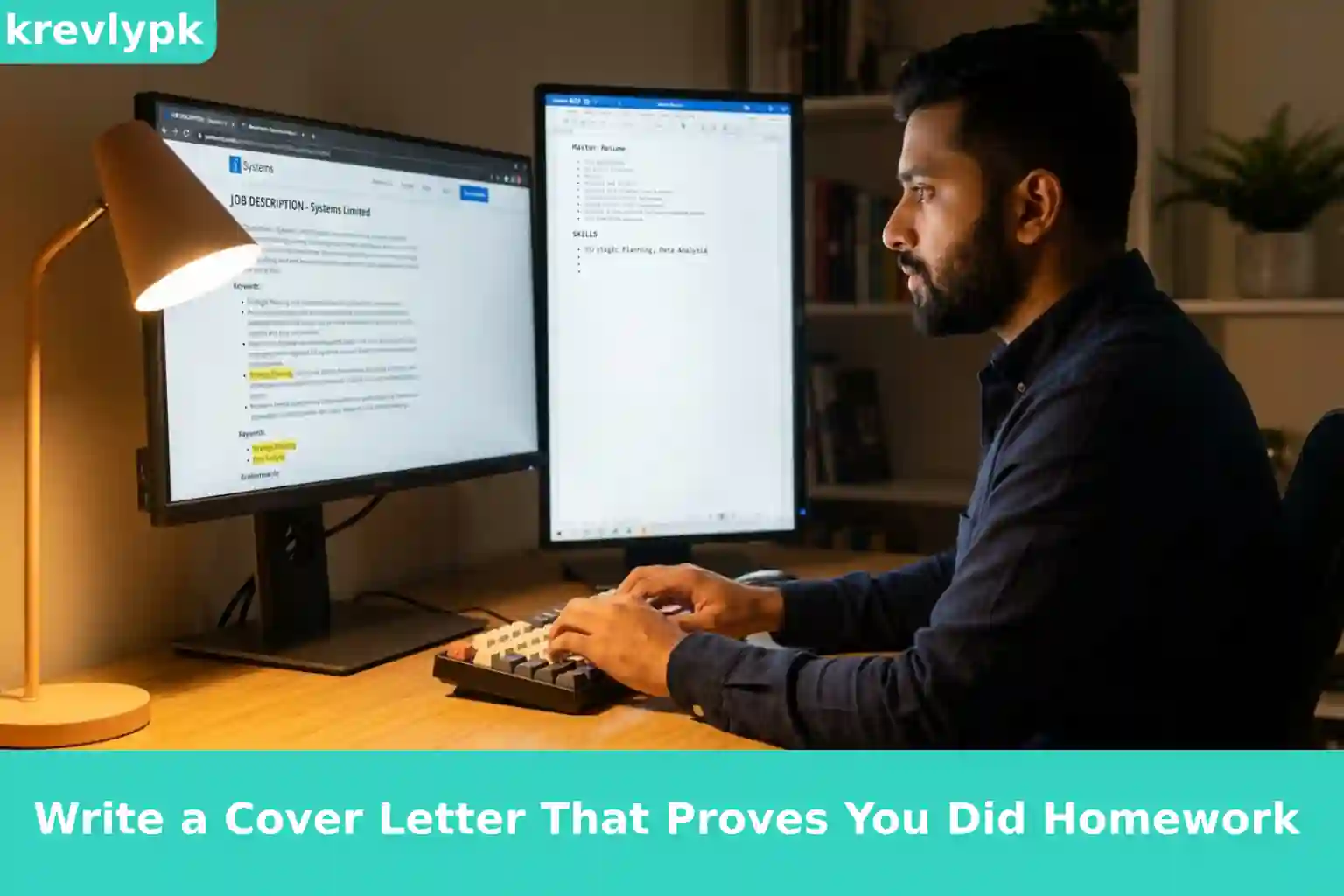
Most cover letters are ignored because they are generic. “I am excited to apply for this position and believe my skills make me an excellent candidate.” That sentence has been written approximately four million times. It tells HR nothing.
A strong cover letter does three things and nothing else.
Not “I am writing to apply for…” but something that shows you actually know this company.
“Your recent expansion into the Multan market caught my attention I’ve been following Systems Limited’s growth strategy for months and the trajectory clearly points toward exactly the kind of work I want to do.”
One sentence. Specific. Human. Immediately different from 90% of what HR reads that day.
Don’t list your achievements randomly. Pick the one or two most relevant things you’ve done and connect them directly to what the job posting says they need. Make the connection explicit so HR doesn’t have to do the work.
Not “I hope to hear from you.” That’s passive. Something like: “I’d welcome the opportunity to discuss how my background in campaign management maps to what your team is building. I’ll follow up next week unless I hear from you first.”
Step 5
Complete the Application Properly
This sounds obvious. It is apparently not, because incomplete applications are one of the most common reasons for rejection.
You must read through your application before applying.
You have spent 45 minutes building a strong, tailored application. Losing it because you forgot to attach the portfolio link or left a mandatory field blank is unnecessary and completely avoidable.
How to Set Up Google Alerts for a Specific Company (Job Research)
From My Experience When I was helping fresh graduates in Lahore, most were checking Rozee.pk …
Read Full GuideStep 6
Track Everything in a Spreadsheet
If you are not tracking your applications, you are not running a job search. You are throwing things into a void and hoping.
Build a simple spreadsheet with these columns:
| Company | Role | Date Applied | Follow-Up Date | Response | Notes |
|---|---|---|---|---|---|
| Unilever Pakistan | Brand Executive | Jan 15 | Jan 22 | No response | Used tailored CV v3 |
| Systems Limited | Business Analyst | Jan 17 | Jan 24 | Interview Jan 28 | Research folder ready |
Here is ready to use spreadsheet template just copy paste into your favorite business suit.
Pro Tip:
Update it every time you apply, follow up, or hear back. After three weeks you will start seeing patterns which types of roles get responses, which companies are engaging, what’s working and what isn’t. That data is invaluable and you cannot see it without tracking.
Step 7
Follow Up Like a Professional
One follow-up email, one week after applying. Nothing more.
“Hi [Name], I wanted to confirm you received my application for [Role] and reiterate my genuine interest in the position. I’m happy to provide any additional information if helpful.”
That’s it. Three sentences. Professional. Not desperate. Not pushy.
Two weeks after that, one more follow-up is acceptable. After that, move on mentally. If they want you, they will contact you. Repeated emails after that don’t demonstrate persistence they demonstrate poor judgment.
The Numbers That Actually Work
Targeted applying:
15 applications × 30-40% interview rate = 5-6 interviews
Time spent: Same 40 hours, invested in quality
Energy cost: Sustainable. Motivation: Maintained by visible results.
Spray applying:
80 applications × 2-3% interview rate = 1-2 interviews
Time spent: 40+ hours of copy-paste applying
Energy cost: High. Motivation: Destroyed by week three.
Final Words
80 applications and no interviews is not a volume problem. It is a quality problem. And the fix is not 160 applications.
Every HR manager who has seen thousands of CVs will tell you the same thing: a candidate who clearly did their homework stands out immediately. Not because they’re more talented. Because they cared enough to prepare. And caring enough to prepare is itself a signal about the kind of employee you’ll be.
That’s how jobs get won in 2026.
Getting hired is no more luck its skill that put you on top of many candiates.

Noman Durrani
Scroll to load document…